
How Elbow Arthroscopy Offers Advanced Treatment for Arthritis, Loose Bodies, and Chronic Elbow Conditions With Less Downtime
Elbow pain that limits your grip, interrupts your sleep, or stops you from doing the things you love is more than an inconvenience. It is a signal that something inside the joint requires attention, and in many cases, it is a signal that warrants a conversation about surgical options. At the practice of James C. Walter, MD, we understand that the word “surgery” can feel daunting, which is precisely why we take the time to explain every available approach and why minimally invasive techniques matter. Elbow arthroscopy represents one of the most significant advances in upper extremity orthopedic care, offering a way to diagnose and treat a range of serious elbow conditions through small incisions rather than large open exposures. Dr. Walter brings specialized expertise in arthroscopic technique to each case, combining precision, patient-centered communication, and a commitment to the best possible outcome for every individual he treats. If elbow pain has been interfering with your life, this guide is a meaningful first step toward understanding your options.
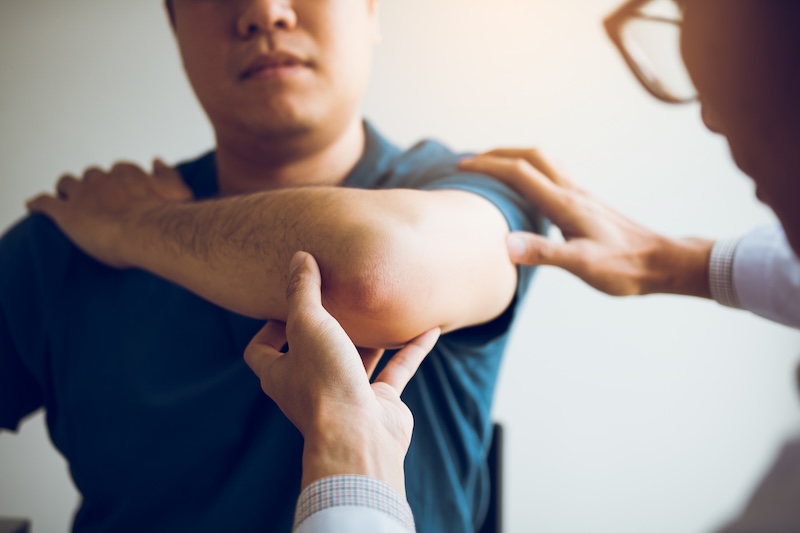
What Is Elbow Arthroscopy and How Does It Work
Elbow arthroscopy is a minimally invasive surgical procedure in which an orthopedic surgeon uses a small camera, called an arthroscope, inserted through tiny incisions to view and treat conditions inside the elbow joint. The camera projects a magnified, high-resolution image onto a monitor in the operating suite, giving the surgeon a detailed view of the joint’s internal structures that is actually superior to what can be achieved through a traditional open exposure.
When treatment is required beyond diagnosis, the surgeon introduces miniaturized surgical instruments through additional small portals to perform the necessary work. Because the elbow is a tight joint surrounded closely by major nerves and vascular structures, arthroscopy here demands a higher level of specialized training than in larger joints like the knee or shoulder. Not all orthopedic surgeons perform elbow arthroscopy, and the skill of the surgeon is a significant factor in both the safety and the outcome of the procedure.
Elbow arthroscopy is performed under regional or local anesthesia in an outpatient setting, meaning hospitalization is not required in the vast majority of cases.
Conditions Treated With Elbow Arthroscopy
Elbow arthroscopy is an effective treatment approach for a meaningful range of conditions, particularly those that have not responded adequately to conservative care.
Loose Body Removal
Loose bodies are fragments of bone or cartilage that break free within the joint and cause pain, catching, locking, and significant loss of motion. They are common in both athletes and non-athletes and can develop as a result of prior trauma, arthritis, or osteochondral injury. Removal of loose bodies arthroscopically is one of the most well-established indications for elbow arthroscopy, with consistently strong patient outcomes.
Elbow Arthritis and Joint Debridement
For patients with elbow osteoarthritis or inflammatory arthropathy, arthroscopic debridement smooths damaged joint surfaces and removes arthritic bone and tissue that is causing pain and restricting movement. Research comparing arthroscopic and open surgery for elbow stiffness and arthritis has found that arthroscopic patients demonstrate better post-operative range of motion, higher satisfaction scores, fewer complications, and shorter hospital stays compared to those who undergo open procedures. This is a meaningful distinction for patients weighing their options.
Synovectomy
In conditions involving significant joint inflammation, such as rheumatoid arthritis, the synovial tissue lining the joint can become thickened and destructive. Arthroscopic synovectomy removes this tissue with precision, reducing inflammation and slowing further joint damage.
Capsular Release for Elbow Stiffness
Post-traumatic elbow stiffness is a challenging problem that can follow fractures, dislocations, or even prolonged immobilization. When conservative measures including physical therapy have been exhausted, arthroscopic capsular release can restore meaningful range of motion by addressing the contracted tissue responsible for the restriction.
Tennis Elbow Unresponsive to Non-Surgical Treatment
For patients with lateral epicondylitis, commonly known as tennis elbow, that has not resolved with rest, physical therapy, injections, or other conservative approaches, arthroscopy offers a way to remove the damaged portion of the involved tendon with minimal disruption to surrounding tissue.
The Advantages of the Arthroscopic Approach
The clinical advantages of elbow arthroscopy over traditional open surgery are well supported in the orthopedic literature. Smaller incisions mean significantly less disruption to the muscles and soft tissues surrounding the joint, which directly translates to less post-operative pain and a faster return to function. Patients typically experience a quicker and more comfortable recovery compared to open procedures, and the cosmetic result of small portal incisions versus a large surgical scar is an additional benefit that many patients appreciate.
The overall complication rate for elbow arthroscopy is low, generally ranging from approximately one and a half to eleven percent across published studies, with nerve-related complications at the lower end of that range in experienced surgical hands. As with any procedure involving a joint as anatomically complex as the elbow, surgeon experience is a critical variable. Patients should seek care from a physician with specific training and a track record in elbow arthroscopy rather than a generalist who performs the procedure infrequently.
Recovery and What to Expect After Surgery
Recovery from elbow arthroscopy is meaningfully shorter than recovery from open elbow surgery, though the timeline varies depending on the specific procedure performed and the underlying condition being treated. Most patients are able to begin gentle range-of-motion exercises within days of surgery. Physical therapy plays an important role in restoring strength and function, and Dr. Walter works closely with rehabilitation specialists to ensure each patient has a clear, supported recovery plan from the day of surgery forward.
Elbow Pain That Has Not Resolved on Its Own? Contact James C. Walter, MD to Discuss Your Options.
You do not have to simply wait and hope that chronic elbow pain improves on its own. If conservative treatment has not delivered the relief you need, elbow arthroscopy may offer a precise, less invasive path toward a more functional and comfortable life. Contact our office today to schedule a consultation with Dr. Walter and find out whether you are a candidate for this advanced approach.